Saturday, May 18, 2013

Flight Report: Air France A380-800 Washington IAD to Paris CDG


As a part of my summer last year, I exchanged with a good friend from Versailles, France. He came for two weeks to visit my family in June. After California, in August, I was to fly over to France to visit with his family during their vacation on Noirmoutier-en-l'Île. The plan was for me to fly from IAD to CDG to NTE (Nantes). This trip was to be the first time I'd flown by myself.

Air France Flight 0039 Information
  • Flight: Washington Dulles (IAD) to Paris Charles de Gaulle (CDG)
  • Flight Time: 7 Hours 30 Minutes
  • Aircraft: Air France A380-800 F-HPJG
  • Seat: 92L (window seat--Upper Deck)


Driving to Washington Dulles, I was really excited to take my first flight on an Airbus A380. As we were pulling into IAD, I decided to check my flightradar24 app on a whim to see where the plane was. Shockingly, it was about to fly right overhead as we were still on the highway. Here are images from my app and camera of the plane passing over our car:


It was nice to be back in IAD again. I rarely fly out of IAD, so it was nice to see some of the unusual airlines and larger aircraft. Here are a few images of our Air France A380 at the gate:


It was nice to board via the separate line for the A380's Upper Deck. The line for the main deck was much longer, with many more people. After a quick boarding, it was finally time to step onto the A380 for the first time. Everything felt clean and new onboard the Air France A380, a really nice aircraft. I was a but jealous of the people seated in business class, which looked quite nice. Below are images of business class, my seat (92L), and the rear-economy section: 

Air France A380 Business Class

The last few rows of the Air France A380's Business Class Cabin 

Upper Deck Premium Economy (Premium Voyageur) on the Air France A380

The Air France A380 rear-economy section

Never having been on a two-deck aircraft before, I made sure to book my seats on the Upper Deck of the A380. Seat 92L was very nice, don't worry about it being close to the galley and lavatory, you could barely notice any people moving back and forth. The farther back you go from this row, the worse off you might be. 

 My seat on the Air France A380: 92L (Upper Deck)

The PTV and remote for my seat, 92L

Window view from 92L

Here is the video from our takeoff at IAD (from my youtube MartinsAviation1). As you can see... a bug managed to hold onto the tail camera for quite awhile: 


I got really lucky on the flight over, the flight was lightly filled which meant there was no one sitting in my row, in addition to many rows of 4 in the middle completely open. I chose to stay in my row and let others who had a seatmates take the open rows. It was nice being able to make a small bed for the overnight flight over.

Overnight, first deck on the A380

One really cool feature of the A380 is the rear, spiral staircase. I saw people walking up and down for exercise and stretching, taking their kids over to play, etc. I liked that they left the stairs open for the majority of the flight. 

The meal service was good on the way over. I was really impressed by the quality of each meal and the service going along with it. Dinner was great and so was breakfast. Here is a photo of our dinner and breakfast from the next morning: 


Our route of flight took us just south of Greenland, over the Southern portion of Ireland and England, and finally over Normandy, into Paris:

The route of our flight, as seen on my PTV

We arrived after a nice flight a little after 6am into Paris CDG and taxiied to gate M5. I guess you could say once again we got a bit lucky. The Upper Deck jetway was either not in operation or non-existent, which mean that we got to de-plane by walking down the forward stairwell. This allowed me to get a view of the inflight art gallery for Business and First Class passengers, as well as a view of the First Class cabin. 

Here is a video from our rather hard landing into CDG. It was cool to see the runway lights in the early morning: 


Here is a photo of the lounge/art gallery: 


Overall, I had a great first experience flying on the Airbus A380. It was a cool thing to say that I've flown on the Upper Deck. I would recommend trying to book a seat in the rear economy section of the plane vs. downstairs... there are a lot of benefits for no extra charge. 

Thanks for reading and watching!

Swayne Martin 
Martins Aviation / From Private to Professional Pilot
Twitter: @MartinsAviation
Youtube: MartinsAviation1 


Wednesday, May 15, 2013

Share Your Story: David Lynn, Air Force C-130 CSO

Welcome to the tenth "Share Your Story" post. Pilots from around the world write in featuring their flight experiences, promoting their blogs, websites, social media, etc. These posts shows future aviators the diverse range of careers available to them. These posts show future aviators the diverse range of careers available to them. More details + how to participate are here: Click Here and Get Involved
---------------------

Where do you start when you have a career in something you are passionate about?  The same place as anyone else, the beginning.  I was blessed to have a dad that loves planes and helicopters.  He did a little flying himself in Hueys while in the Army, but never "lived the dream" to its fullest.  What he did do though was pass that love on to his youngest son.  

Strapping into the T-6 Trainer

Some of my earliest memories involve looking at planes with my dad.  We lived under the approach path of DFW so all growing up I remember watching the massive airliners fly by wondering what that would be like.  I used to get my dad to take us to the airport to ride the trains and watch the planes.  This was way before TSA so anyone could go out to the terminals after going through a metal detector.  We would just sit there and watch the planes come and go.  At the time I knew nothing about them, but it planted a seed that has carried me for at least 25 years.  

One of my favorite memories was going to The Boneyard at Davis Monthan Air Force Base in Tuscon, AZ.  I was only about eight years old, but I will never forget it.  This was right at the end of the Cold War when all of the B-52s were being taken to the desert to be cut up into pieces.  I remember taking a bus ride with my dad through what felt like miles and miles of solid B-52s.  They were all still clean and almost brand new looking.  It amazed me how so many planes could be in one place at the same time.  I recently had the opportunity to go back to The Boneyard and saw all of those B-52s again, only now they are all cut up in pieces rotting away in the Arizona desert.  This time there were rows of F-16s lined up awaiting their destiny.

B-52 Boneyard, Arizona

As I grew up my love of aviation never went away, but my life just seemed to be drifting another direction.  Fortunately, I have an awesome sister that encouraged me to follow my dreams.  So I enlisted in the Marine Corps as an aviation ordnanceman while I worked on my degree with every intent of becoming a Marine Aviator.  I loved most of my time in the Marine Corps and am so glad I had the experience, but long story short I started a family and my dreams of flying changed a little.  I finished my degree in Aviation Management from Southern Illinois University (which has an awesome aviation program on campus, as well as the satellite campus that I attended), and began looking for a job in San Diego.

After no luck finding a job, I left San Diego for Austin, TX with the plan of paying my own way into commercial aviation while working at an FBO.  It was one of the more fun jobs that I had ever had because I got to be around planes all day.  It wasn't glamorous work, and downright sucked when it was 120+ degrees out on the tarmac, but how could you not love being around such beautiful aircraft?

I started working on my PPL but was only able to get in about 8 hours before my daughter was born and I just couldn't afford it.  I resigned myself to the fact that I may just have to work in a non-flying job in aviation, which was still in the right industry, just a little bit of a letdown.

Then one day I visited an old friend who is a retired USAF Colonel, and jokingly told my wife, "Maybe I should just join the Air Force!"  Well six months later I was selected for OTS and a year after that I reported to NAS Pensacola to begin my training as an Air Force navigator, now referred to as a Combat Systems Officer (CSO).  That's right, I am still not a pilot.  I still really wanted to be, but I figured if I can't be a pilot at least I can still have a job in the air.

NAS Pensacola

CSO training starts out much the same way as pilot training does in the Air Force.  You attend initial flight screening in Pueblo, CO.  If you were not familiar with flying at all it was what you would consider a baptism by fire.  Just imagine getting all of your academics for you PPL in one week, then flying five days a week with formal briefings every day, and little time for anything other than studying.  The flying itself was awesome.  We flew the DA-20, fondly referred to up there as The Mighty Katana.  For those unfamiliar with the DA-20 it is essentially a glider with an engine, but it was still a fun little plane to fly.

DA-20 Katana

Once I got back to Pensacola I started actual CSO training.  I will spare you all the boring details of academics and simulators and such, but there was still some fun flying worth talking about.  The first plane we flew was the T-6 which is the same trainer that I believe all of the US military uses.  It was amazing flying in a fully aerobatic, turbo-prop aircraft.  I got to do loops, split-s's, cuban eights, and only threw up once.  While I am honestly glad I did not end up in a fighter, it was an awesome experience.  Flying around at 20,000 ft when you have a 360 degree view, or can just flip upside down is amazing.  

Here is a GoPro video, flying in the T-6 Texan:


The other aircraft that we used in CSO training is the T-1 which is essentially the military version of the Beechjet.  The flying is not nearly as fun or intense as in the T-6, but it is always a good time flying low-level routes, no matter what plane you are flying in.

Upon completing CSO training I was assigned to be a navigator on the C-130 Hercules at Little Rock AFB, AR.  Initially I was really disappointed, but it has worked out for a number of reasons that I won't bore you with.  The C-130 is an awesome aircraft that has been the workhorse of the Air Force for at least 40 years.  There are a ton of different variants, but I am on what is referred to as a "slick" C-130 since we are strictly a cargo hauler.


It was on the C-130 that I came to really enjoy flying low-level.  On one flight in particular it struck me how awesome it was.  It was an overcast day with light rain so initially I was kind of hoping my training flight would be cancelled, so I could go home and go back to sleep, but we ended up flying anyway.  I had an experienced pilot that day so he was able to take us down to about 300 feet AGL for most of the route.  So picture this, we are in a plane that weighs about 130,000 lbs, cruising at about 210 knots, with a steady rain falling, looking UP at hills that are only 500 ft tall.  It was on that flight that it really hit me how cool flying this mission is.  I am yet to deploy on the C-130 though I hope to have the opportunity sooner than later, but it is still fun to fly no matter where we are.

Recently, I have also increased my love of aviation through blogging(AviationGuy.com), and interacting with fellow AvGeeks on Twitter.  I really enjoy writing about what I love, and even more so interacting with people who are as passionate about planes as I am. I recently had the opportunity to go to Seattle, and I actually met a handful of people that I had previously only ever tweeted with.  

That is what is amazing about aviation.  We all come from different backgrounds, have different stories, and want different things from flying, but in the end we all share the same passion.  We can sit and talk for hours about planes we saw, flights we took, or even just the ones we dream about.  Not everyone is an AvGeek, but AvGeeks are everywhere, and if you ever start to waiver in your love of flying just spend a few hours with them talking about how amazing it is and you will fall in love all over again.

Twitter: @davidvlynn
Blog: www.aviationguy.com


Thanks so much David for sharing how you got into an aviation career! It was really interesting to read about how you started out like most aviators, watching all of the planes come into nearby airports... it's the exact same for me! 

Thanks again for writing in and participating in the Share Your Story section of the blog, 

Swayne Martin 

Martins Aviation / From Private to Professional Pilot
Twitter: @MartinsAviation
Youtube: MartinsAviation1 


Monday, May 13, 2013

When You Can't Fly - Grounded

Being a student pilot and having the opportunity to fly nearly every weekend is an amazing thing. Before January, I flew on average about 15 flights (legs) a year, commercially. Now that I'm in training, I'm fortunate to fly frequently, which is amazing. Knowing that I am going flying over the weekend definitely gets me through the school week!


Another favorite flight video

Every now and then, things don't go as planned, and you're grounded for a few weeks at a time due to things out of your control. The fact that I've gotten used to flying frequently makes that even more difficult. 

Flying has taught me a lot about patience; flying is really something that you can't push the boundaries on. It's all about safety! If the weather is bad, no go. That's something entirely out of my control, and it honestly takes some getting used to as a new pilot. The weather totally dictates what you do when flying.

The last time I flew was 2 weeks ago. This weekend is mother's day weekend, family is in town, and the weather hasn't been great, so no flying. Next weekend, my instructor is going to be out of town, so I won't be flying then either. Overall, once this next weekend has passes, it will have been 3 or 4 weeks since I have last flown, something I'm not entirely happy about. I don't have a whole lot of time with my instructor before he moves in June, so I am trying to fit as much time in with him as I can. 


This is what you don't want to have happen

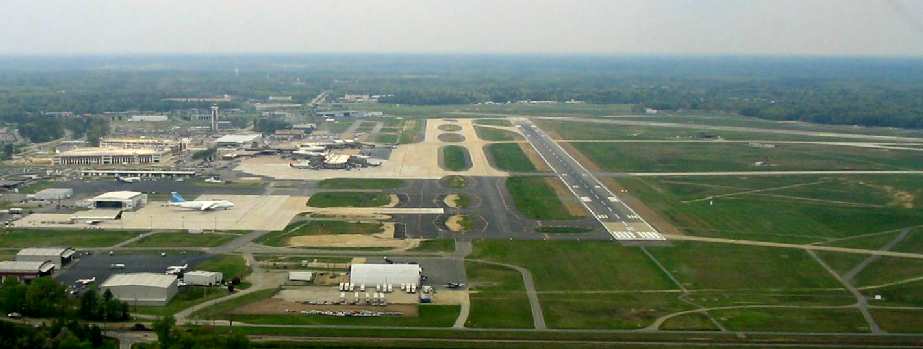
My next lesson is scheduled to be a longer flight between Hanover (KOFP) and Norfolk or Newport News. I will practice flying in Class C airspace as well as communications with control towers. I'm so excited to fly into a larger airport, with larger runways, that services commercial airlines. In addition, soon I will be flying into RIC, which is the airport I've grown up flying out of. The day I land myself on those runways will be a huge deal for me personally! 


 Richmond International Airport (RIC), I will be flying here soon

Until then, it's going to be a long few weeks without flying! 

Hopefully I'll be back up in the air soon,
Thanks for reading,

Swayne Martin
Twitter: @MartinsAviation


Sunday, May 12, 2013

Happy Mother's Day!

Happy Mother's Day to the greatest mom in the world who helped me begin to love aviation from an early age. You been with me from the beginning, I couldn't do it without you mom! 


You've been there with me since my first flight lesson, never failing to call and wish me luck when I go flying. When I took off on my first solo flight, I saw you jumping up and down by the ramp area. Hopefully I'll be flying with you in the plane soon once I get my Pilot's License! Can't wait!


Love you Mom, 
-Swayne


Saturday, May 11, 2013

Flight Report: American Airlines 767-300ER Los Angeles LAX to Chicago O'Hare (ORD)

After an early morning flight from Santa Rosa, on Horizon Air, we got ready for our next leg, flying back towards Virginia. 

I was especially excited about this flight because this was to be my first flight on a Boeing 767. Never having been on the 767, I wasn't sure what to expect, but I was excited! I had a window seat for the flight which was nice. In addition to being my first 767, this was the first national widebody flight I have ever been on.

American Airlines Flight 1196 Information
  • Flight: Los Angeles International Airport (LAX) to Chicago O'Hare International (ORD)
  • Flight Time: 3 Hours, 55 Minutes
  • Aircraft: American Airlines 767-300 [N349AN] 
  • Seat: 36J (window) 

Our 767 at the gate in LAX


Our AA767-300ER, N349AN


Here is the video from our: Takeoff at LAX on the cloudy day: More video can be found on my youtube channel, MartinsAviation1


Flying back over the western United States was again another cool experience to have from the window.  I didn't have internet access on this flight, so I couldn't see where were, live, unless I looked up at the moving map on the ceiling TV's. 

In general, the AA767 flight was pretty good. I wasn't really all that impressed with the seats. I remember them being pretty tight and not comfortable in general. After landing, I couldn't imagine having to sit in those seats for 9+ hours, on a flight to South America or Europe, as this plane frequently does. This was my first widebody flight within the United States, which I thought was very cool. Even though the seats weren't great... I'd certainly recommend flying on a larger aircraft, like this if you have the option. 

The new 767 cabin on our flight to Chicago 


My seat, 36J on the American Airlines 767-300ER

Flying somewhere over New Mexico 


Here is the video from our landing at Chicago O'Hare (ORD). We were delayed slightly because of rain and thunderstorms: 


Thanks for reading and watching!
Swayne Martin
Twitter: @MartinsAviation


Wednesday, May 8, 2013

Share Your Story: Cecil Mullins, Author, B707/African Bush Pilot

Welcome to the ninth "Share Your Story" post. Pilots from around the world write in featuring their flight experiences, promoting their blogs, websites, social media, etc.These posts show future aviators the diverse range of careers available to them. More details + how to participate are here: Click Here and Get Involved
------------------------------

Cecil is an accomplished pilot and author who has flown in all corners of the world. From Boeing 707's to Military Tankers to Bush Flying in Africa, he shares his story, how he got into flying, and the variety of jobs he held, right here on the blog. His book, The African Bush Pilot, is well worth a read for any aspiring pilot. His second addition of the novel was released just a few days ago! Thanks for writing in Cecil, here he is: 

-----------------

Welcome to Cecil Mullins: 

I grew up as A Good-Ole Country Boy in the coal fields of Southwest Virginia, with a dream of flying the beautiful Boeing 707 that had just begun flying the sky’s in the mid 1950s.


Cecil on the right

I escaped spending my life working in the coal mines by joining the Air Force. In the first years of my Air Force, my assignment was to be an aircraft jet mechanic. From being a mechanic I requested the duties of a flying boom operator on the KC-97G tankers, while on duty with the Tennessee Air National Guard, further advancing to the flight engineer position. All at the same time I still held on to my dream of becoming a pilot on the beautiful Boeing 707, while training on the small aircraft to get my pilots licenses. I also ended up with a flight instructor certificate, A&P, Reciprocating and Jet flight engineer certificate and four type ratings on the L-188, B-727, B-707/720 and DC-8.


KC-97 Refueling Boom

During the period of duty with the Tennessee Air National Guard, in 1968 I volunteered for special duty status with an organization called “Joint Church Aid USA’, which was supporting the country of Biafra during a revolutionary war from the country of Nigeria. From this point, there was no turning back. I became a pilot on the C-97 Stratofreighter, which we used to carry supplies to the Biafra Ibo Tribe to Uli air strip within the country. After that, the same company organized “Foundation for Airborne Relief” which was destined to support Bangladesh around 1972 by getting C-133s from the bone yard in Arizona for the mission.


This is the C-97 we got in the tree tops in Biafra 


While maintaining my position with the Tennessee Air National Guard, the KC-97s were replaced by    KC-135s in 1978 which did not require flight engineers. I then took up residence at Charleston S.C. flying C-141s. This organization took me to virtually every country in the world.


The C-141

While at Charleston, I finally acquired a civilian flying position with Fleming Airways in Miami. This was a non-scheduled cargo carrier which were operating L-188 (Lockheed Electra’s). After a while I upgraded to captain of the ship and later to check captain. I continued with this company until 1985, when I went with Air Atlanta, a small scheduled executive type carrier located in Atlanta, Ga. This was like dying and going to heaven, compared to the dark thirty, back alley cargo flying.


Lockheed Electra 188

After Air Atlanta went tits up, I scooted over to Independent Air (The Atlanta Skylarks) where I finally saw my dreams reach fruition by flying the beautiful Boeing-707. This company was a primarily vacation charter carrier that also covered lots of the world, mostly the Caribbean Islands, Mexico, parts of Europe and many other places. We also did a around the world trip with the company. I was selected to be the chief pilot and check captain of this organization.


Independent Air Boeing 707

After that, I flew with Gulf Air, Emory Worldwide, Private Jet Expeditions and Nations Air. I was also one of the check captains for Nations Air.

In 1991 it was back to the jungles of Africa with a company called Transafrik, flying cargo and whatever else into the war zone of Angola. This carried on until 1994. One would need to read my book to view the nature of this operation. (If you have viewed the movie “Air America”, you have an idea, except we were flying jets). I retired from the Airlines at the young age of 60 in 1996.


-------------------------------

Thanks so much Cecil for sharing your incredible career with us. It's an amazing thing to see the diverse range of careers you held flying around the world. It motivates me to work hard and think not just of the typical "airline jobs," but to see the range of opportunities there are around the world in places like Africa for pilots. 

Cecil is an accomplished author that just released his second addition of "The African Bush Pilot." See and buy his fantastic novel here: The African Bush Pilot

Thanks again for writing in and participating in the Share Your Story section of the blog, 

Swayne Martin 
Martins Aviation / From Private to Professional Pilot
Twitter: @MartinsAviation
Youtube: MartinsAviation1